Wood Fence Restoration in Tampa That Actually Lasts
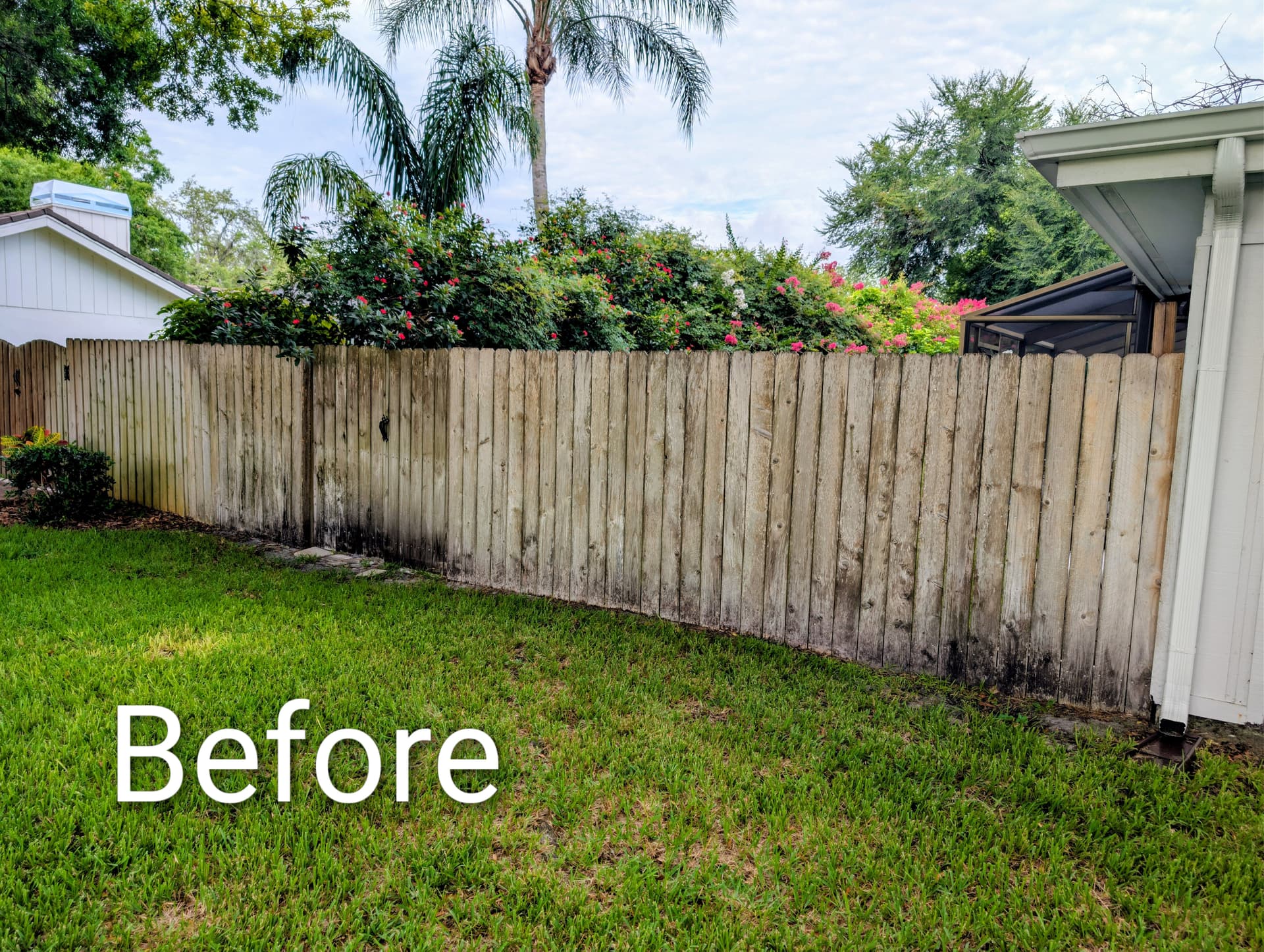
Florida weather is hard on wood fences. Between the humidity, the rain, and the intense sun, it doesn't take long for a fence to go from sharp-looking to gray, grimy, and rough. That's exactly what we were dealing with here - heavy buildup, dark mold staining along the base boards, and wood that had completely lost its color. Left alone, that kind of deterioration doesn't stop. It just keeps going.
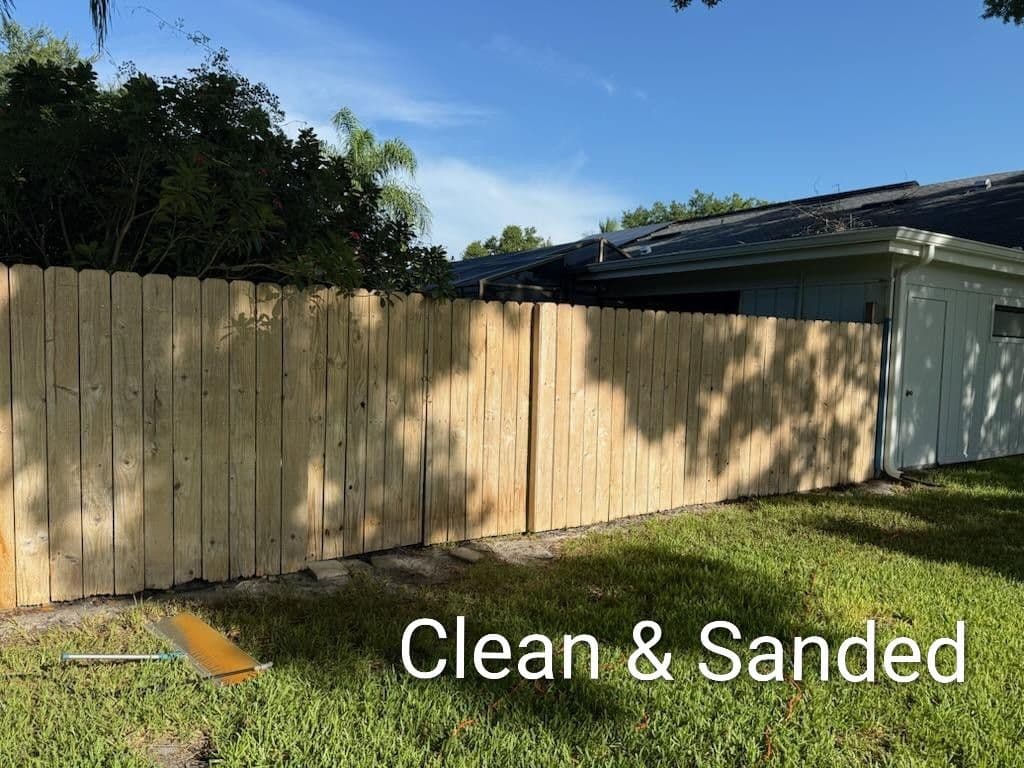
The first step is always a thorough fence cleaning. We clear off all the surface grime, mold, and mildew before anything else touches the wood. Skipping that step and going straight to stain is one of the most common mistakes people make - you end up locking all that buildup in rather than sealing clean wood. After cleaning, we sand the boards smooth so the stain actually absorbs evenly and bonds the way it should.
That prep work is what separates a finish that lasts from one that peels and fades inside of a year. Tampa's climate is tough on exterior wood. You need a stain that's applied correctly - over clean, open-grain wood - or the protection just isn't there.
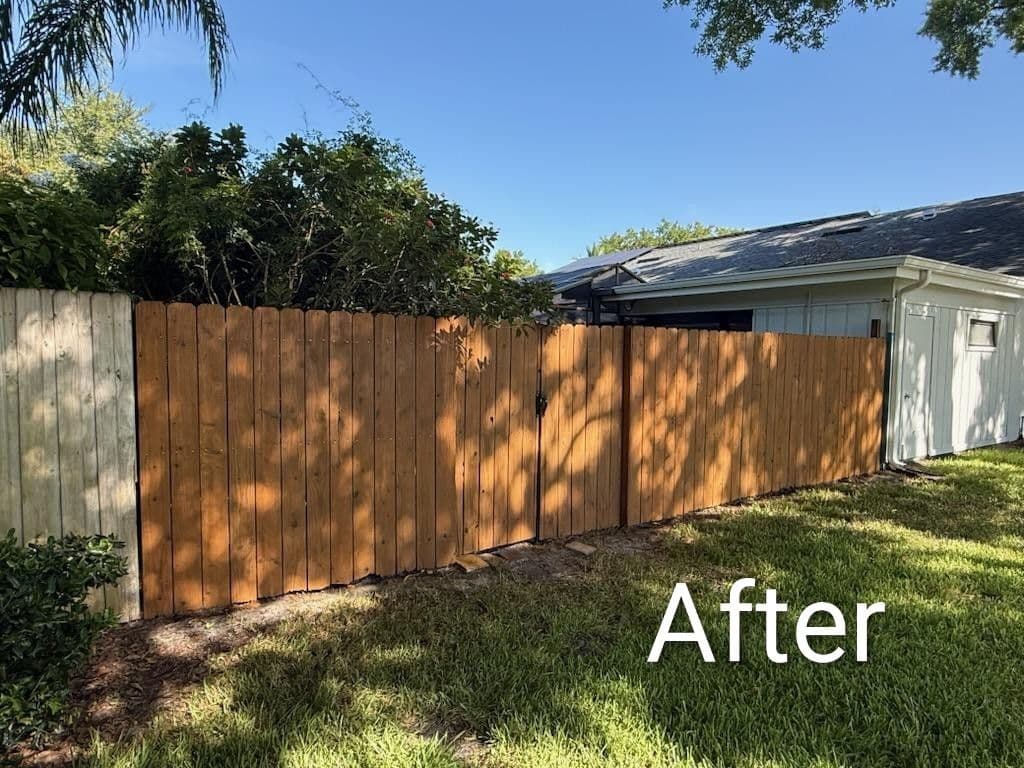
Once the stain went on, the difference was dramatic. Deep, warm wood tones replaced what had been a weathered gray surface full of dark spots and rough patches. The wood grain is visible again. The fence looks solid. That's what a proper restoration gets you - not just a better-looking fence, but one that's actually protected from what Florida weather throws at it.
If your fence is starting to look worn down, it's worth addressing sooner rather than later. The further the wood deteriorates, the harder it is to bring back. Cleaning, sanding, and staining at the right time keeps you from having to replace boards - or the whole fence - down the road.